Garage Door Opens a Few Inches Then Stops: Here's Why
Of all the symptoms homeowners describe on the phone, this one is the easiest to identify. A door that rises three to six inches, strains and drops back is telling you the counterbalance system has failed.
Quick answer
Of all the symptoms homeowners describe on the phone, this one is the easiest to identify. A door that rises three to six inches, strains and drops back is telling you the counterbalance system has failed.
Pricing and quote factors →By HG Garage Door
Garage door service team · Canton and Metro Atlanta, Georgia.
Last updated:
About our team →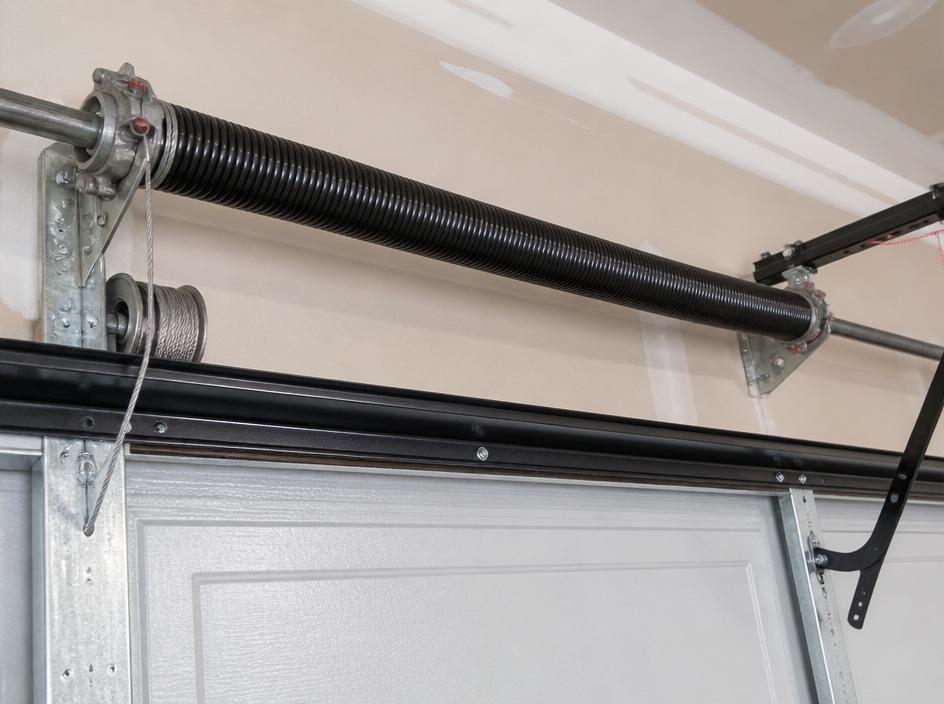
Check the spring from a safe distance
Stand inside the garage, keep the door closed, and look at the shaft above the opening. Do not touch anything.
- A two-inch gap in a coil means a snapped torsion spring.
- A stretched, sagging spring alongside the track is a failed extension spring.
- A loud bang heard earlier in the day, like a gunshot, is the spring breaking.
- A door that feels far heavier than usual by hand confirms it.
The other likely causes
When the springs look intact, the resistance is coming from somewhere else.
- A roller that jumped its track and is binding at the curve.
- A bent track section from a bumper tap.
- The manual slide lock left engaged on one side.
- Ice bonding the bottom seal to the slab after a freeze.
- An up-force setting on the opener set too low after a recent adjustment.
Stop operating the door
Every attempt with a broken spring puts the entire door weight on the opener's gear and the lift cables. That is how a $300 spring job turns into a spring, a gear, a cable set and a bent panel. Unplug the opener and use the other door until service arrives.
What a proper spring repair includes
We measure wire size, inside diameter and length to size the replacement correctly, replace both springs so the balance stays even, inspect cables, drums and bearings, then re-tension and balance the door so it holds at mid-height on its own. Finally we reset the opener's travel and force and test auto-reverse.
Frequently Asked Questions
Why does my garage door only open a few inches?
That is the classic signature of a broken torsion spring — the opener cannot lift the door's full weight. Look for a two-inch gap in a coil above the door, and stop using the opener until it is replaced.
Can I still use my garage door with a broken spring?
No. Every cycle puts the full door weight on the opener gear and the lift cables, which turns a spring replacement into a spring, gear, cable and sometimes panel repair. Unplug the opener until service arrives.
How long does spring replacement take?
A standard torsion spring replacement takes about 60 to 90 minutes on site, including measuring the correct spring size, replacing the pair, re-balancing the door, and resetting the opener's travel and force.
Get a Free Garage Door Quote
Pick your city, the type of work and a preferred date — we'll come back with a firm price, usually the same day.
Related Pages
Related service and reading
More Articles
Why a Sealed Garage Door Matters
A tight, well-sealed garage door lowers energy bills, blocks pests and moisture, reduces noise, and improves security.
Off Track Garage Door: Causes, Risks and Proper Repair
A door that jumped its track is a safety hazard. Here's what causes it, what not to do, and how it is repaired properly.
Broken Garage Door Spring: Signs, Safety and Replacement
A snapped torsion spring leaves a 150+ lb door with no counterweight. Learn the warning signs and how it is replaced safely.
Garage door help in your city
Local repair pages with response times, common problems and FAQs for each city we serve.
- Garage door repair in Canton
- Garage door repair in Woodstock
- Garage door repair in Acworth
- Garage door repair in Kennesaw
- Garage door repair in Marietta
- Garage door repair in Roswell
- Garage door repair in Alpharetta
- Garage door repair in Milton
- Garage door repair in Cumming
- Garage door repair in Ball Ground
- Garage door repair in Holly Springs
- Garage door repair in Jasper
- Garage door repair in Waleska
- Garage door repair in Dawsonville
- Garage door repair in Johns Creek
- Garage door repair in Duluth
- Garage door repair in Suwanee
- Garage door repair in Smyrna
- Garage door repair in Dunwoody
- Garage door repair in Sandy Springs
- Garage door repair in Brookhaven
- Garage door repair in Chamblee
- Garage door repair in Doraville
- Garage door repair in Norcross
- Garage door repair in Peachtree Corners
- Garage door repair in Buford
- Garage door repair in Lawrenceville
- Garage door repair in Cartersville
- Garage door repair in Dallas
- Garage door repair in Hiram
- Garage door repair in Kennesaw Mountain area