Garage Door Roller Replacement: Steel vs Nylon
Builders install the cheapest rollers available: unsealed steel wheels with a handful of loose ball bearings. They last about seven years, then they start grinding, flat-spotting, and pulling doors out of the track.
Quick answer
Builders install the cheapest rollers available: unsealed steel wheels with a handful of loose ball bearings. They last about seven years, then they start grinding, flat-spotting, and pulling doors out of the track.
Pricing and quote factors →By HG Garage Door
Garage door service team · Canton and Metro Atlanta, Georgia.
Last updated:
About our team →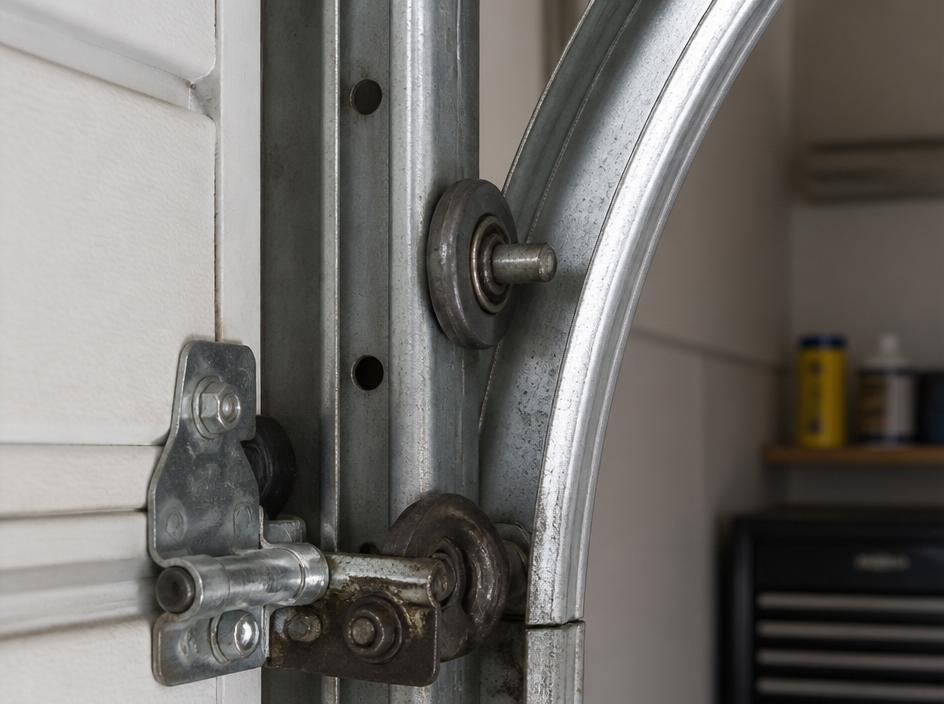
Signs your rollers are done
Rollers fail gradually, and the symptoms show up long before the door comes off track.
- Grinding or squealing that follows the door up and down.
- Visible flat spots, chips or a wheel that no longer spins by hand.
- Black dust or metal shavings inside the tracks.
- The door shudders or hesitates at the curve section.
- Bent roller stems, which mean the wheel has been dragging rather than rolling.
Steel vs nylon: what actually matters
The material is only half the story — the bearing count and whether the bearing is sealed matters more.
- Builder-grade steel, unsealed, 8-10 bearings: loud, short-lived.
- Nylon wheel with 11-13 sealed bearings: quiet, 10-15 year life, the standard residential upgrade.
- Sealed steel with 13 bearings: best for heavy commercial doors where nylon can deform.
- Stem length must match your track and hinge set; 4-inch is common residential.
- Never replace only the noisy ones — mixed wear reintroduces drag.
The one roller you should never touch
The bottom roller sits in the same bracket as the lift cable, which is under full spring tension. Loosening that bracket releases the cable and the door drops. Every other roller can be swapped by rolling the door up and flexing the section; the bottom pair requires unloading the springs first.
This is the single most common cause of DIY garage door injuries we see.
Pair the job with a tune-up
Rollers are usually replaced alongside hinge inspection, hardware torque, bearing plate lubrication and a balance test. Doing them together is what turns a loud door into a quiet one, which matters most on doors under a bedroom.
Frequently Asked Questions
How often should garage door rollers be replaced?
Builder-grade unsealed steel rollers typically need replacing every seven to ten years. Sealed nylon rollers with 11 to 13 bearings commonly last ten to fifteen years and run much quieter.
Are nylon garage door rollers better than steel?
For residential doors, yes — nylon wheels with sealed bearings are dramatically quieter and do not shed metal dust. Heavy commercial doors still do better on sealed steel rollers, which will not deform under load.
Can I replace garage door rollers myself?
The intermediate rollers can be changed by flexing the sections, but the bottom rollers share a bracket with the lift cables under full spring tension. Loosening that bracket can drop the door, so the bottom pair should be left to a technician.
Get a Free Garage Door Quote
Pick your city, the type of work and a preferred date — we'll come back with a firm price, usually the same day.
Related service and reading
More Articles
Why a Sealed Garage Door Matters
A tight, well-sealed garage door lowers energy bills, blocks pests and moisture, reduces noise, and improves security.
Off Track Garage Door: Causes, Risks and Proper Repair
A door that jumped its track is a safety hazard. Here's what causes it, what not to do, and how it is repaired properly.
Broken Garage Door Spring: Signs, Safety and Replacement
A snapped torsion spring leaves a 150+ lb door with no counterweight. Learn the warning signs and how it is replaced safely.
Garage door help in your city
Local repair pages with response times, common problems and FAQs for each city we serve.
- Garage door repair in Canton
- Garage door repair in Woodstock
- Garage door repair in Acworth
- Garage door repair in Kennesaw
- Garage door repair in Marietta
- Garage door repair in Roswell
- Garage door repair in Alpharetta
- Garage door repair in Milton
- Garage door repair in Cumming
- Garage door repair in Ball Ground
- Garage door repair in Holly Springs
- Garage door repair in Jasper
- Garage door repair in Waleska
- Garage door repair in Dawsonville
- Garage door repair in Johns Creek
- Garage door repair in Duluth
- Garage door repair in Suwanee
- Garage door repair in Smyrna
- Garage door repair in Dunwoody
- Garage door repair in Sandy Springs
- Garage door repair in Brookhaven
- Garage door repair in Chamblee
- Garage door repair in Doraville
- Garage door repair in Norcross
- Garage door repair in Peachtree Corners
- Garage door repair in Buford
- Garage door repair in Lawrenceville
- Garage door repair in Cartersville
- Garage door repair in Dallas
- Garage door repair in Hiram
- Garage door repair in Kennesaw Mountain area