Garage Door Won't Close? 9 Causes and How to Fix Them
A door that refuses to close is the single most common service call we take in Canton and Cherokee County. About half of them are solved in under ten minutes once you know where to look.
Quick answer
A door that refuses to close is the single most common service call we take in Canton and Cherokee County. About half of them are solved in under ten minutes once you know where to look.
Pricing and quote factors →By HG Garage Door team
Garage door service team · Canton and Metro Atlanta, Georgia.
Last updated:
About our team →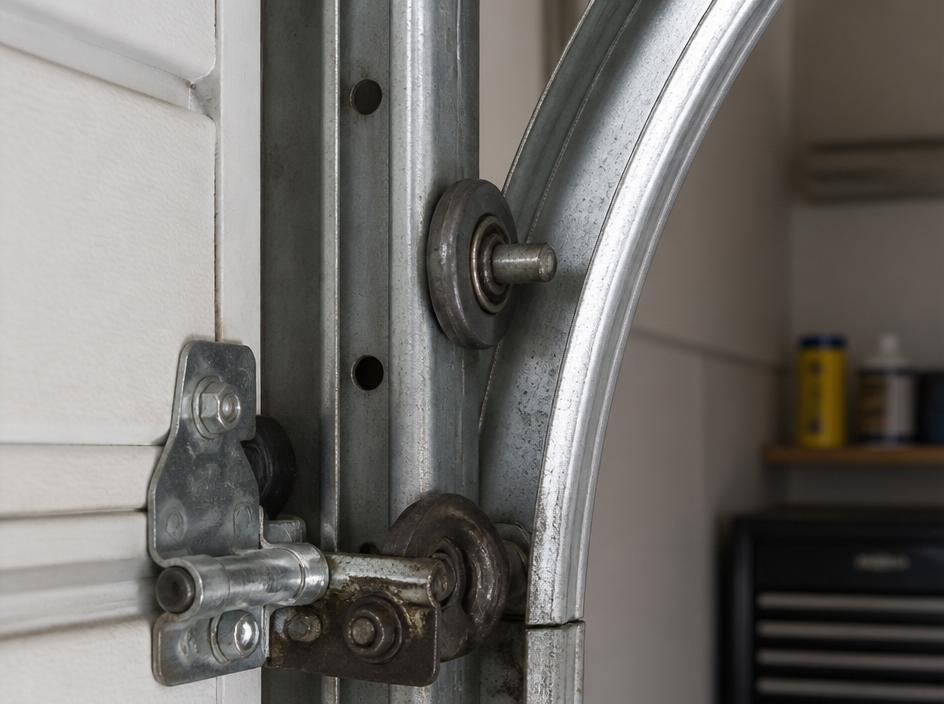
Start with the safety sensors
Federal law requires photo-eye sensors on every opener made after 1993. If the beam between them is broken or misaligned, the opener will refuse to close and will flash its lights or beep.
- Wipe both lenses — spider webs and dust alone stop the beam.
- Check the LEDs: one steady green and one steady amber (colors vary by brand) means aligned. A flickering light means one bracket has been bumped.
- Loosen the wing nut, aim the sensor at its partner, and retighten once the light stops blinking.
- Look for a stapled or pinched sensor wire along the wall — rodents and staples cut these often.
- Move bikes, bins and boxes out of the beam path, which sits about six inches off the floor.
Travel limits and force settings
If the door closes fully and then immediately opens, the opener thinks it hit something. That is usually a close-limit set too low, forcing the door into the floor, or a down-force setting that is too sensitive.
On most units these are dials or buttons on the back of the motor head. Small adjustments only — a quarter turn at a time — then test the auto-reverse with a 2x4 laid flat under the door.
Mechanical causes that need a technician
When the opener is fine, the door itself is the problem.
- A broken torsion spring — the door is too heavy for the opener to control.
- A bent track or a roller that has jumped out, binding the door mid-travel.
- Frayed or loose lift cables, leaving one side higher than the other.
- Hardened rollers and dry bearings creating enough friction to trip the force sensor.
- A warped bottom section that no longer meets the floor squarely.
- A rusted or damaged bottom seal catching on an uneven driveway slab.
Pull the red emergency release and lift the door by hand. If it will not stay put at waist height, the springs are out of balance and the door needs service, not an opener adjustment.
Frequently Asked Questions
Why does my garage door close halfway and then go back up?
The opener is detecting resistance. The usual causes are a misaligned or dirty photo-eye sensor, a close-limit set too far, an obstruction in the track, or a roller binding partway down. Test the door manually with the emergency release: if it sticks at the same point by hand, the problem is mechanical, not electronic.
Why is my garage door sensor light blinking?
A blinking receiving-eye LED means the infrared beam is broken or the sensors are out of alignment. Clean both lenses, loosen the bracket, aim one sensor at the other until the light is solid, then retighten. If the light never comes on at all, the sensor wire is damaged.
Can I close my garage door if the sensors are broken?
Most openers let you hold the wall button down continuously to close the door in an emergency, but you should never disable or bypass the sensors permanently. They are federally required and are the only automatic protection against a child or pet under the door.
Get a Free Garage Door Quote
Pick your city, the type of work and a preferred date — we'll come back with a firm price, usually the same day.
Need it fixed?
Discuss your garage project or door symptoms with our team.
Related service and reading
More Articles
Why a Sealed Garage Door Matters
A tight, well-sealed garage door lowers energy bills, blocks pests and moisture, reduces noise, and improves security.
Off Track Garage Door: Causes, Risks and Proper Repair
A door that jumped its track is a safety hazard. Here's what causes it, what not to do, and how it is repaired properly.
Broken Garage Door Spring: Signs, Safety and Replacement
A snapped torsion spring leaves a 150+ lb door with no counterweight. Learn the warning signs and how it is replaced safely.
Garage door help in your city
Local repair pages with response times, common problems and FAQs for each city we serve.
- Garage door repair in Canton
- Garage door repair in Woodstock
- Garage door repair in Acworth
- Garage door repair in Kennesaw
- Garage door repair in Marietta
- Garage door repair in Roswell
- Garage door repair in Alpharetta
- Garage door repair in Milton
- Garage door repair in Cumming
- Garage door repair in Ball Ground
- Garage door repair in Holly Springs
- Garage door repair in Jasper
- Garage door repair in Waleska
- Garage door repair in Dawsonville
- Garage door repair in Johns Creek
- Garage door repair in Duluth
- Garage door repair in Suwanee
- Garage door repair in Smyrna
- Garage door repair in Dunwoody
- Garage door repair in Sandy Springs
- Garage door repair in Brookhaven
- Garage door repair in Chamblee
- Garage door repair in Doraville
- Garage door repair in Norcross
- Garage door repair in Peachtree Corners
- Garage door repair in Buford
- Garage door repair in Lawrenceville
- Garage door repair in Cartersville
- Garage door repair in Dallas
- Garage door repair in Hiram
- Garage door repair in Kennesaw Mountain area