HG GARAGE SPACES
Epoxy & Polyaspartic Floors
Quick answer
HG Garage Spaces diamond-grinds the concrete, fills cracks, then applies a base coat, decorative flakes and a clear UV-stable topcoat. The result is a glossy, easy-to-clean floor that resists hot-tire pickup, oil and salt.
Pricing and quote factors →The floor is the biggest surface in the garage. A coated floor changes the whole room.
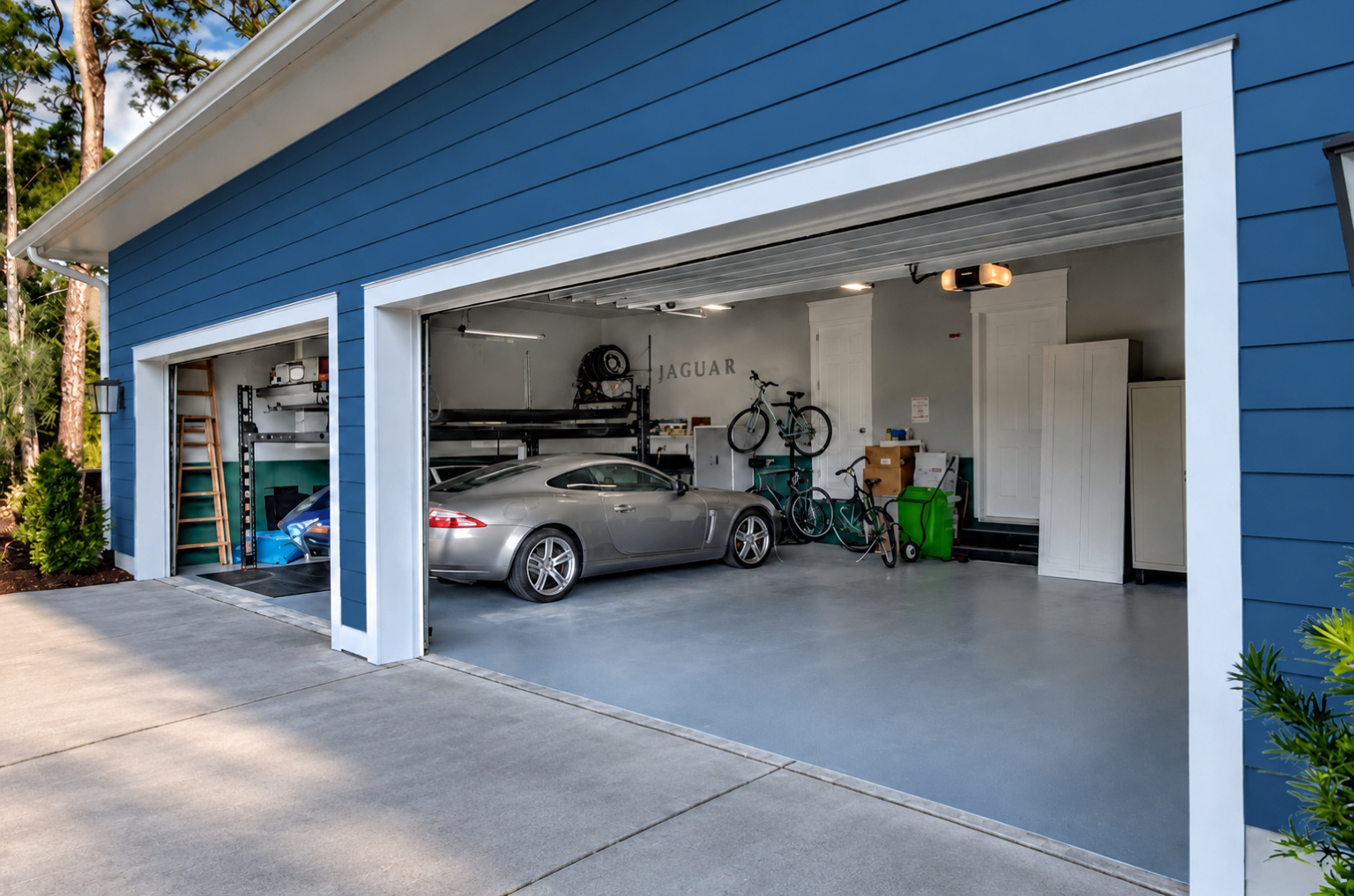
What we do
HG Garage Spaces diamond-grinds the concrete, fills cracks, then applies a base coat, decorative flakes and a clear UV-stable topcoat. The result is a glossy, easy-to-clean floor that resists hot-tire pickup, oil and salt.
What's included
- ✓ Diamond grinding of the slab (no acid etching)
- ✓ Crack and pit repair
- ✓ Base coat in your color
- ✓ Full-broadcast decorative flakes
- ✓ Clear polyaspartic or epoxy topcoat
- ✓ Optional anti-slip texture
How the work goes
- 1Moisture and slab test
- 2Diamond grind and vacuum
- 3Repair cracks
- 4Base coat and flakes
- 5Scrape and topcoat
- 6Cure time before cars return
TYPICAL RANGE: A few thousand dollars
Exact price after a free walk-through. Your project is led by Kelvin, our project manager.
Written handover and repair planning
Keep the system specification, preparation details and return-to-use instructions after installation. Review the finished edges and texture with the installer and ask which visual differences may remain around repairs or joints. A future patch can differ in sheen and flake distribution, especially as the original surface ages. Do not apply an unknown coating over a damaged area before checking compatibility. Product warranty and installation coverage are separate questions; read their scope and exclusions rather than interpreting a long term as protection against every change in the underlying slab.
Use the finished floor according to its intended exposure and keep an eye on the entrance, where water, sunlight and grit can be concentrated. If recurring dampness or new movement appears, investigate the cause before a cosmetic repair. Photos and product records help explain the situation, but they do not replace an assessment. A coating project is easier to maintain when the owner knows the material, the cleaning instructions and the limitations as well as the decorative color selected at the beginning.
Start with the concrete, not the color
A garage coating is only as dependable as the concrete underneath it. Before discussing flakes or gloss, inspect the slab for loose concrete, old paint, oil, cracks, soft repairs and persistent damp areas. Measure the actual coating area, including any returns, steps or raised curbs that are included. A two-car garage is a description of use, not an exact floor measurement. Explain whether cars, lawn equipment, a workbench or exercise equipment will return to the room so the system can be selected for real exposure.
Moisture testing is an important part of deciding whether the chosen coating is suitable. A dry-looking surface is not proof that moisture moving through the slab is within the product limits. Ask which test method will be used and compare the result with the manufacturer’s acceptance criteria. ASTM F2170 describes in-situ relative humidity testing; a result applies to the locations and conditions actually tested. If moisture is outside the system limits, investigate the source and mitigation options before installation rather than covering the symptom.
Epoxy, polyaspartic and floor paint compared
Epoxy is a resin chemistry, not a complete installation specification. Products differ in solids content, thickness, intended use and resistance to chemicals. An epoxy base may be used beneath decorative flakes and a different clear topcoat. When comparing proposals, identify every layer and the manufacturer’s intended application. Do not assume two quotations that say epoxy describe the same system, preparation or service life. Exposure to sunlight at an open garage entrance also makes the finish and its UV characteristics worth discussing.
Polyaspartic coatings are commonly selected for fast curing and UV-resistant finishes, but rapid cure also demands controlled mixing and installation. Temperature and humidity affect the working window and return-to-use schedule. A polyaspartic topcoat over an epoxy base is different from a system that uses polyaspartic in every layer. Ordinary concrete floor paint generally offers a thinner decorative finish rather than the same build as a multi-layer resin coating. Compare maintenance expectations and future preparation costs, not just the first purchase price.
Preparation and installation sequence
Clear the room before preparation begins and arrange another place for stored belongings. Old coatings and contaminants may need removal before grinding. Diamond grinding creates a mechanically prepared surface suited to the specified system; the installer must also control dust and vacuum thoroughly. Cracks, pits and damaged areas need an appropriate repair material. Some joints are intended to move and should not simply be bridged because a seamless appearance looks attractive in a photograph.
The typical sequence is testing and preparation, agreed repairs, base coat, decorative flakes where specified, removal of excess flakes and the clear topcoat. Every stage has product-specific mixing, coverage and recoat requirements. Edges at the door, steps and walls should be agreed in advance. Discuss a slip-resistant texture suitable for wet shoes and vehicles; a highly glossy surface and good traction are not automatically the same thing. Keep the written system specification so future repairs can use compatible products.
What changes the project cost
The useful starting point is measured area and slab condition. Removing an existing coating, treating oil-contaminated concrete, repairing spalling and addressing moisture can change labor substantially. The proposed number of coats, full versus partial flake coverage, vertical surfaces and the selected clear coat also affect the scope. If two estimates differ, ask whether both include the same preparation and repair allowances. A low initial figure may exclude exactly the work the old slab needs.
Access matters as well: belongings must be moved, equipment needs a safe path into the garage, and cars need a temporary parking plan. Ask who removes old shelving and whether it will be reinstalled after curing. Coordinate wall painting, cabinets and lighting so later trades do not damage the new finish. HG provides a project-specific quote rather than an unverified numerical range. The pricing guide explains the factors to discuss; a walk-through identifies which of them apply to your floor.
Cure times and returning cars
Dry to the touch, ready for foot traffic and ready for vehicle traffic are different milestones. Use the current technical data sheet for the exact coating system and the installer’s instructions for the actual temperature and humidity. Do not borrow the timing from a different product’s advertisement. Cold conditions can extend curing, while fast-reacting products may shorten the installation window. Ask for a written parking date, a separate foot-traffic date and any restrictions on heavy cabinets or equipment.
Plan the household schedule before the installation visit. Keep children and pets out of the work zone and follow ventilation instructions for the products being used. Avoid dragging cabinets across a newly coated floor. Mats, tires and heavy stationary objects may need additional time before placement. If the weather changes or installation conditions fall outside the product limits, a schedule adjustment is better than rushing. A clear handover explains what you can safely do on each day after the work.
Cleaning, maintenance and realistic durability
Sweep away grit that can abrade the finish and remove spills promptly. Use cleaning products compatible with the installed coating, generally following the manufacturer’s instructions for a mild cleaner and water. Avoid assuming that a chemical-resistant finish is resistant to every solvent. Place suitable protection under sharp metal feet, inspect the entrance where sunlight and rain reach the floor, and report damage early so a small repair does not become a larger problem.
No coating is a repair for ongoing structural movement or a drainage problem. A moving slab can crack through a coating, and unresolved moisture can undermine adhesion. Keep the product details, preparation records and care instructions with your home documents. If a future patch is needed, understand that a perfect match to an aged flake finish may not be possible. The strongest durability plan combines correct preparation, a suitable system, sensible cleaning and attention to changes in the concrete.
Epoxy floors by city
Questions
How long before cars can return?
Use the parking schedule for the exact installed system and actual conditions. Foot traffic and vehicle traffic can have different cure requirements; the technical data sheet and handover instructions control.
Is polyaspartic always better than epoxy?
No. Compare the complete coating system, preparation, UV exposure, working conditions and maintenance. Some systems use an epoxy base and a polyaspartic topcoat.
Do you test the slab for moisture?
Moisture assessment should be part of system selection. Ask for the specified test method, result and manufacturer limits before agreeing to the coating.
Can old floor paint be coated over?
Only if the chosen system permits the existing substrate and its adhesion is suitable. Old or weak paint often needs removal; inspection determines preparation.
Will coating stop concrete cracks?
No. Coating is not a structural repair and cannot guarantee that moving concrete will not crack. Discuss repairs and moving joints before installation.
How do I clean a flake floor?
Remove grit and clean using products approved for the installed coating. Wipe spills promptly and avoid dragging sharp or heavy items across the finish.
Can the finish be less slippery?
Discuss the appropriate texture and traction additive for the system. Appearance, ease of cleaning and wet traction should be considered together.