How Long Does a Garage Door Last? Part-by-Part Lifespans
Homeowners often ask whether a repair is worth doing on a door of a certain age. The honest answer depends on which part you are talking about, because the parts age at very different rates.
Quick answer
Homeowners often ask whether a repair is worth doing on a door of a certain age. The honest answer depends on which part you are talking about, because the parts age at very different rates.
Pricing and quote factors →By HG Garage Door
Garage door service team · Canton and Metro Atlanta, Georgia.
Last updated:
About our team →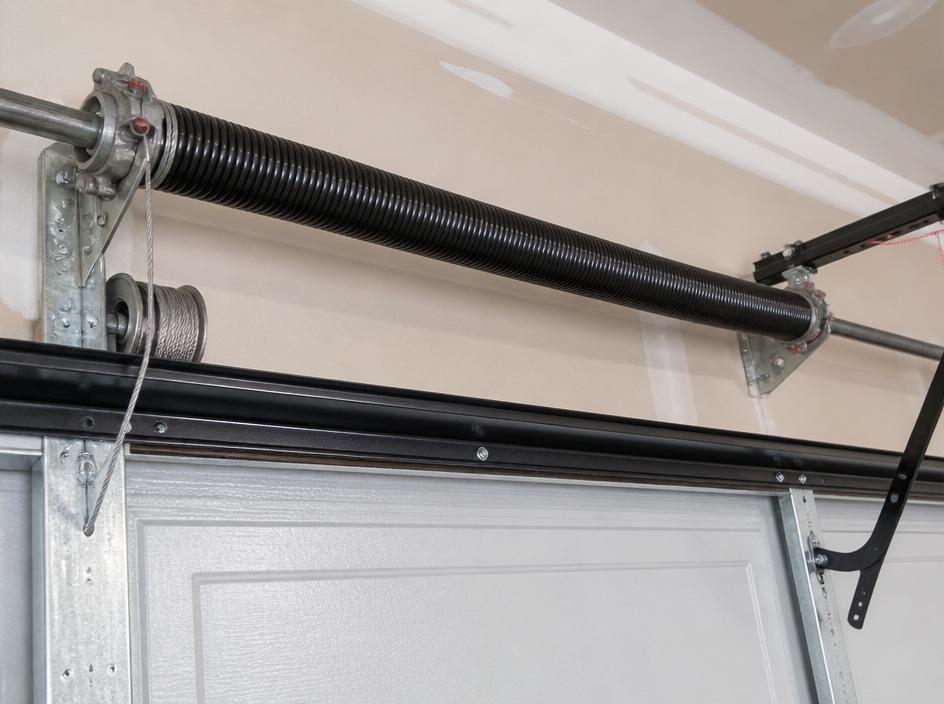
Typical lifespans, by part
These are cycle-based, not calendar-based. One cycle is one open plus one close, and a typical family runs three to six cycles a day.
- Torsion springs: 10,000 cycles standard, roughly 7-10 years; 20,000-cycle springs roughly double that.
- Lift cables: 8-12 years, sooner where they run through standing water or humidity.
- Rollers: 7-10 years for builder-grade steel, 10-15 for sealed nylon.
- Hinges and brackets: 15+ years, unless the door has run unbalanced.
- Bottom seal and stop molding: 3-7 years in Georgia sun.
- Openers: 10-15 years; logic boards often fail first, especially after surges.
- Steel door sections: 20-30 years, mostly limited by finish and impact damage.
What shortens all of them at once
One condition drives most premature failures: an unbalanced door. When springs are wrong or worn, the opener, cables, rollers and hinges all carry load they were never designed for.
- Springs sized for a lighter door, common after insulation is added.
- Skipping annual lubrication, especially in pollen and humidity.
- Repairing only the failed spring or cable instead of the pair.
- Running the door with a dragging roller or bound track.
- An undersized opener on a heavy insulated or wood door.
Is it worth repairing at this age?
A door with sound sections, straight tracks and undamaged stiles is almost always worth repairing, regardless of age — springs, cables, rollers and openers are all replaceable wear items. Replacement becomes the better spend when the sections themselves are compromised: rusted bottom sections, torn stiles, repeated impact damage, or a single-layer door on a home where noise and heat matter.
Getting the most life out of the door
High-cycle springs on a door used many times a day, sealed nylon rollers, an annual balance and hardware service, a surge protector on the opener, and fixing small symptoms early. Those five habits routinely add a decade to a door that would otherwise be replaced.
Frequently Asked Questions
How long does a garage door last?
Steel door sections typically last 20 to 30 years, while the wear parts are much shorter: springs 7 to 10 years, cables 8 to 12, rollers 7 to 15, seals 3 to 7 and openers 10 to 15 years.
How many cycles do garage door springs last?
Standard springs are rated for about 10,000 cycles, or roughly seven to ten years of typical use. High-cycle springs rated at 20,000 or 25,000 cycles roughly double that and are worth it on doors used many times a day.
Is it worth repairing an old garage door?
Yes when the sections, tracks and end stiles are sound, because springs, cables, rollers and openers are all replaceable wear items. Replacement makes more sense when sections are rusted, stiles are torn, or the door is single-layer on a home where heat and noise matter.
Get a Free Garage Door Quote
Pick your city, the type of work and a preferred date — we'll come back with a firm price, usually the same day.
Related Pages
Related service and reading
More Articles
Why a Sealed Garage Door Matters
A tight, well-sealed garage door lowers energy bills, blocks pests and moisture, reduces noise, and improves security.
Off Track Garage Door: Causes, Risks and Proper Repair
A door that jumped its track is a safety hazard. Here's what causes it, what not to do, and how it is repaired properly.
Broken Garage Door Spring: Signs, Safety and Replacement
A snapped torsion spring leaves a 150+ lb door with no counterweight. Learn the warning signs and how it is replaced safely.
Garage door help in your city
Local repair pages with response times, common problems and FAQs for each city we serve.
- Garage door repair in Canton
- Garage door repair in Woodstock
- Garage door repair in Acworth
- Garage door repair in Kennesaw
- Garage door repair in Marietta
- Garage door repair in Roswell
- Garage door repair in Alpharetta
- Garage door repair in Milton
- Garage door repair in Cumming
- Garage door repair in Ball Ground
- Garage door repair in Holly Springs
- Garage door repair in Jasper
- Garage door repair in Waleska
- Garage door repair in Dawsonville
- Garage door repair in Johns Creek
- Garage door repair in Duluth
- Garage door repair in Suwanee
- Garage door repair in Smyrna
- Garage door repair in Dunwoody
- Garage door repair in Sandy Springs
- Garage door repair in Brookhaven
- Garage door repair in Chamblee
- Garage door repair in Doraville
- Garage door repair in Norcross
- Garage door repair in Peachtree Corners
- Garage door repair in Buford
- Garage door repair in Lawrenceville
- Garage door repair in Cartersville
- Garage door repair in Dallas
- Garage door repair in Hiram
- Garage door repair in Kennesaw Mountain area