How should I set up a garage workshop for power, light and dust?
Design around the tools, materials and work you actually do, then plan power, lighting and dust handling before finishing walls. Keep vehicle movement and exits separate from cutting, sanding and tool storage.
Free on-site estimate — call (470) 999-6963
Updated · HG Garage Door
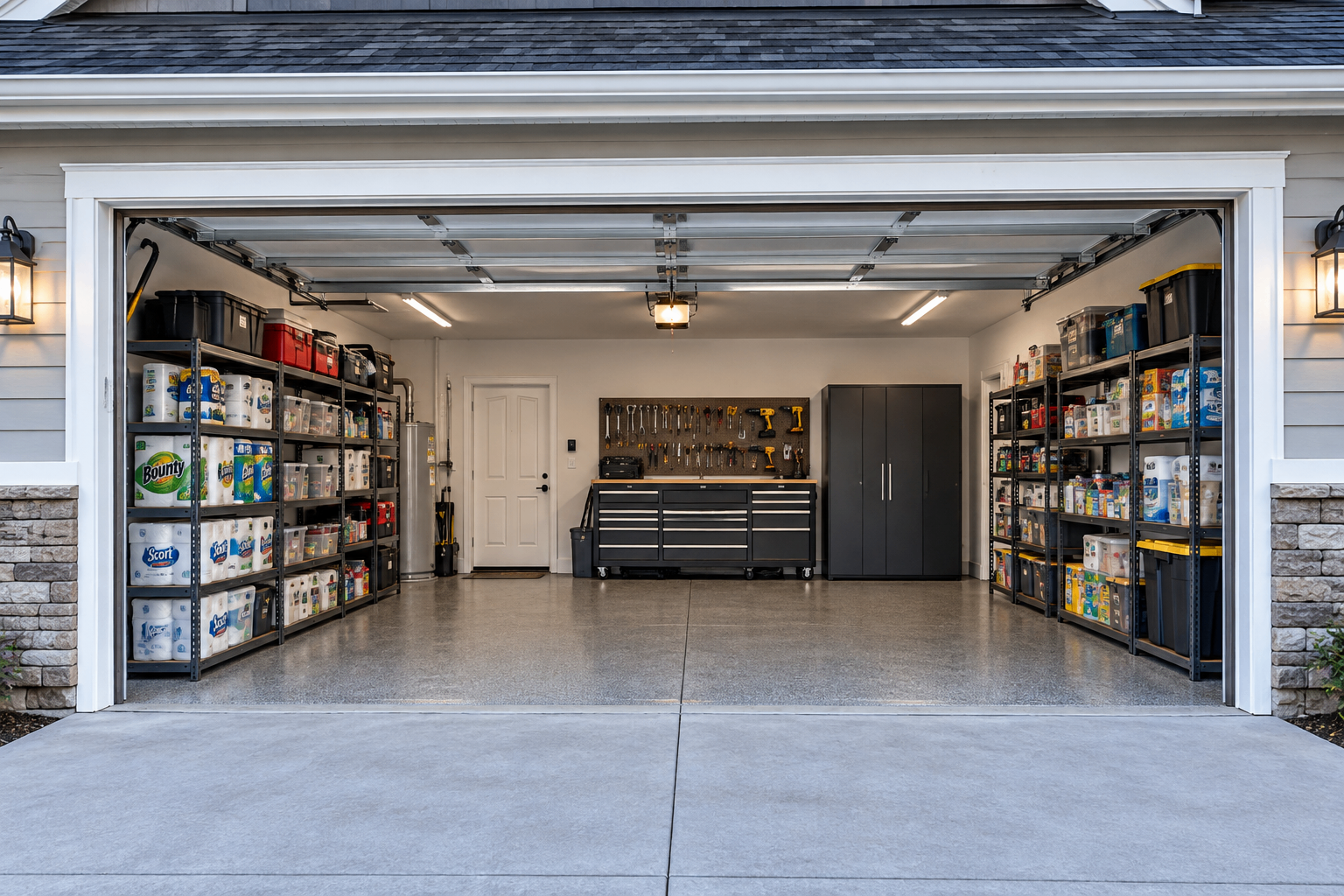
How do I lay out tools and a workbench safely?
Start with the path a full-size workpiece takes through each tool, not just the machine footprint. A saw, bench or assembly table can require clear space on both sides during operation.
Draw the room with the overhead door open and closed and mark tracks, the opener, utility access and the household entry. Use each tool manufacturer's setup and clearance instructions. Position frequently used hand tools near the bench without forcing someone to reach over a running machine.
Keep heavy stock low and secured, and reserve a location for finished pieces so they do not block the exit while glue or coatings cure. If parking remains, decide how the workshop is packed away before a car enters. Do not rely on an open garage door as the only clearance plan, because weather and the door mechanism may make that arrangement impractical.
A workable shop should remain safe during ordinary use with its actual tools.
What power planning should happen before wall finishes?
Have a licensed electrician assess the tools and any dust-collection or climate equipment together. Circuit needs, outlet placement and protection should be determined from actual equipment requirements rather than guessed from a tool category.
List equipment names, ratings and which machines may operate simultaneously. Include lighting and any charger, compressor or heater that shares the space. Do not run permanent shop operations from extension cords across the floor or improvise electrical adapters.
Plan outlets where cords do not pass through a blade path or vehicle route, and maintain required panel access. Ask about permits and inspections before concealing wiring. If the workshop layout may change, discuss suitable future provisions with the electrician, but do not assume unused conduit supplies power by itself.
Keep the agreed electrical plan with cabinet and bench drawings so storage installation does not bury a receptacle or force a cord into an unsafe path.
How should task lighting work around the garage door?
Provide useful light at the work surface while keeping fixtures outside the door's travel and tool-clearance zones. General brightness alone does not prevent a blade, hand or measurement from falling into shadow.
Check the bench with your body in the normal working position and the overhead door both open and closed. Place task lighting so it does not produce glare from a glossy bench or reflect into eye protection. Use securely installed fixtures suited to the environment and coordinate electrical work with the qualified trade.
Do not hang loose lamps or cords near tracks, moving equipment or sanding dust. Preserve access for cleaning and changing lights without climbing on tools. Windows can help daylight, but they may create glare or affect exterior approvals if added.
Plan lighting before wall and ceiling finishes so the final installation does not require cutting through newly completed work or relocating a rack after it is loaded.
What should I do about dust and fumes?
Dust handling must match the tools and materials, and a garage door left open is not a complete control plan. Use suitable collection and protective practices according to equipment, product and safety guidance.
Discuss source capture, filter requirements and collection placement with a qualified specialist when the work creates significant dust. Keep collection hoses from becoming trip hazards or passing through a door path. Do not assume a general household vacuum is appropriate for every material, fine dust or combustible hazard.
Follow labels for paints, adhesives and solvents; separate incompatible storage and avoid ignition sources. Never run a combustion engine or generator inside the workshop. Consider how air movement affects adjacent rooms and any gym or office area, and preserve required house separation.
Clean using methods suitable for the materials rather than spreading dust through the garage with an ordinary fan. If the planned activity requires specialized ventilation, resolve that before finishing the room.
How can I reduce workshop noise?
Reduce avoidable vibration and choose a layout that keeps noisy activity away from sensitive adjacent rooms. No decorative wall treatment can be promised to soundproof a workshop without assessing the full structure and equipment.
Follow tool mounting instructions and ask about appropriate isolation where the equipment maker permits it. Loose benches and unsecured storage can add rattling unrelated to the tool itself. Discuss the ceiling and wall assembly before adding acoustic material, especially beneath a bedroom or against the house.
Preserve fire separation, ventilation and access, and do not hang insulation near moving garage door parts. Consider household routines and applicable local or HOA restrictions when planning work hours. An insulated door or quieter opener can improve one source of sound without solving power-tool noise.
If controlling transmission is a major goal, get a project-specific assessment rather than selecting a product based only on an advertised acoustic label.
What is the installation sequence for a finished workshop?
Set the layout and safety requirements first, then complete approvals and concealed work before wall finishes, flooring and storage. Bring in tools after the room is ready for their weight, mounting and cleaning needs.
Ask the free estimate to separate garage renovation from specialist tool, dust and electrical systems. Decide whether a coating fits the chemicals, rolling equipment and traction needs of your workshop, and request compatibility details. Mechanical concrete preparation and drywall work create their own debris, so keep tools protected elsewhere.
Allow required inspections and the floor system's actual cure stages in the calendar. Install cabinets and benches with suitable support, not just screws placed where the finished wall looks convenient. At handover, keep equipment manuals, mounting information and finish care instructions.
Walk through a complete task from material entry to cleanup to confirm cords, stock and stored projects do not obstruct the door, exits or access to utilities.
What else should I know before starting?
Can I power a workshop from extension cords?
Do not use extension cords as a permanent electrical plan. Have a licensed electrician assess the tools, simultaneous loads and outlet locations for an approved installation.
Is an open garage door enough for dust control?
No. Source collection, suitable filtration and safe material-specific practices matter. An open door may move air, but it does not establish safe exposure or proper dust handling.
Can acoustic panels make the garage soundproof?
Not on their own. Noise transmission depends on tools, mounting and the building assembly. Get a specific assessment and preserve required separation, ventilation and access.
Should I install a workbench before coating the floor?
Plan it early, but coordinate installation with preparation and cure requirements. Keep tools away from dirty finish work and use mounting methods appropriate for the actual structure.
Plan your garage makeover
Tell us what you want your garage to do. Call or send the form below to arrange your free on-site estimate.
HG Garage Door · 1353 Riverstone Pkwy, Ste 120-259, Canton, GA 30114
Mon–Fri 9:00 AM – 7:00 PM · Sat Closed · Sun 10:00 AM – 3:00 PM